International Perspectives on Military Education
volume 3 | 2026
Graphic Organizers and Workbooks in Adult Military Education
Tools not just for Children
Bryan Leese, PhD, and Mrs. Dawn Bofo, EdS
https://doi.org/10.69977/IPME/2026.005
PRINTER FRIENDLY PDF
EPUB
AUDIOBOOK
Abstract: This article explores the application of interactive and graphic organizers for adult military education, particularly in accelerated graduate-level courses. The study uses instructors and students in Joint professional military education (JPME) at the Joint and Combined Warfighting School program, where traditional pedagogical approaches can lead to diminished comprehension and retention. By integrating interactive graphic organizers into the curriculum, this study aimed to enhance student engagement and promote active learning, while accommodating an older adult population with diverse academic and military backgrounds. The authors present findings from a survey of students and faculty during the yearlong study that demonstrate the students’ perception of a positive impact of these tools on comprehension, retention, and exam preparation, suggesting a transformative shift in teaching practices for adult education in military settings. Ultimately, this study advocates for a reevaluation of educational strategies to better meet the needs of adult learners and promote more effective learning experiences.
Keywords: adult learning, andragogy, graphic organizers, active learning, accelerated courses, professional military education, PME
Today’s adult learners are busy and have little time for education. To meet their needs, there has been a rise in the use of accelerated graduate-level courses, which maintain the same contact hours as standard courses but are delivered in fewer, longer sessions.[1] This format encourages out-of-class learning and reflection. Accelerated courses are increasingly common in civilian institutions and have been used by the Department of Defense’s Joint professional military education (JPME) programs for decades. For instance, U.S. and international military professionals complete a master’s degree in strategic studies at Senior Service Colleges in 10 months, while the Joint and Combined Warfighting School (JCWS) offers a 10-week certificate course that meets senior-level education learning outcomes.[2]
Students and instructors in accelerated courses face significant challenges because they rely on traditional pedagogical methods rather than andragogical ones. Lectures, often based on PowerPoint, deliver information quickly but can lead to oversimplification of concepts and poor retention, with information retention declining after approximately 15 minutes.[3] While JPME seminars aim for discussion-based learning, the accelerated format pushes instructors to prioritize mini-lectures, resulting in less time for meaningful discussions. This “sage on the stage” approach primarily serves to summarize readings and share personal experiences before opening the floor for dialogue.[4]
Retention of information from reading is also complicated during an accelerated course. Researchers have found that student retention of material is related to poor comprehension and writing skills, which is compounded by a lack of time to reflect on the material.[5] One way to support student comprehension and knowledge retention is to create learning resources for the instructor and the students. The literature on the use of graphic organizers, a two-dimensional document, or interactive organizers, a three-dimensional document often referred to as a Foldable®, guides student note-taking during reading, lectures, and discussions. These teaching tools are used for K–12 and sometimes in higher education courses. Studies suggest that offering written prompts and graphic organizers enhances student engagement and the perceived value of the material.[6]
Still, there are a few studies examining the use of interactive and graphic organizers in post-graduate adult education.[7] However, a notable lack of studies exists on their effectiveness within the U.S. JPME student population taking accelerated graduate courses. This article assesses a potential solution to some of the challenges associated with accelerated courses. By creating and using interactive and graphic organizers assembled into a workbook, instructors can increase active learning, enhance student engagement with the commonly used lecture formats, and help manage the reading load during adult learning classes. Descriptive statistics and thematic analysis from a survey of students and faculty who utilized the workbook demonstrate its effectiveness by increasing user engagement, comprehension, and retention of concepts, as well as preparing for and taking exams.
To assess the practicality of the Joint Forces Fundamentals Workbook, the study surveyed adult students attending the National Defense University’s (NDU) Joint Forces Staff College JCWS. Within the NDU system, the JCWS is part of the Joint Forces Staff College (JFSC) in Norfolk, Virginia. The JCWS is a professional military education institution where career officers from all U.S. military Services, their civilian agency counterparts, and international officers from U.S. allies and partners take a 10-week graduate-level course. The JCWS offers two modalities—resident and hybrid—designed to teach national security professionals how to plan and execute Joint, interagency, intergovernmental, and multinational operations.[8]
JCWS offers four sequential courses during 10 weeks: Joint Force Fundamentals (JFF), Strategy and Campaign Design (SCD), Integrated Contingency Planning (ICP), and Crisis Action Planning (CAP). Besides the four core courses, students choose one of seven elective courses that meet once weekly throughout the program. Known as Focused Study Seminars, these electives allow students to analyze the nature of current and future warfare. The JFF course is a nine-day program designed to reintroduce and reinforce students’ understanding of key concepts, including the civil-military relationship, strategy development, operational art, and the military profession. JFF includes 16 lessons featuring a mix of large-group lectures, a staff ride to the Yorktown Battlefield within the Colonial National Historical Park, small-group exercises during the seminar, and seminar discussions. The course ends with students taking a 25-question multiple-choice exam.
Active Learning in Accelerated Adult Learning
Graduate school instructors find it challenging to connect the material to their students. These students are adults, and according to Malcolm S. Knowles, who is known for introducing the idea that adults learn differently from children, they should be self-directed and motivated to take the initiative in their learning. While this is true, there may be a wide range of ages and experiences in the classroom.[9] According to the National Center for Education Statistics, traditional full-time graduate students have an average age of about 30, while part-time students’ average age is around 36.[10] A classroom could include students from their early 20s to their late 40s. Both groups of adults have different perspectives on education and diverse motivations for pursuing it.
The concept of adult learning, known as andragogy, emerged in the early 1970s as a distinct approach from pedagogy, which focuses on how children learn. Since that time, the analysis of adult education and andragogy has led to it being described as guidelines, assumptions, philosophy, and a theory. Knowles’ position is that andragogy presents “core principles of adult learning that in turn enable those designing and conducting adult learning to build more effective learning processes for adults.”[11]
The Knowles’ model has six core principles: self-concept, life experience, readiness to learn, orientation to learning, motivation to learn, and a need to increase knowledge. Graduate schools have made progress toward adapting andragogy principles into curriculum design, technology integration, and faculty development. The primary difference between andragogy and pedagogy is the perspective, not the age of the students. In pedagogy, the perspective is that of the learner who depends on the instructor, is motivated by extrinsic factors, has limited life experience, and is oriented to learn subjects practically sometime in the future. The perspective drives a teacher-centered, direct learning model. In contrast, andragogy views that because the student is older, their life experiences and future goals shape a student-directed and autonomous learning style with intrinsic motivation focused on real-world problems and applying solutions. Therefore, the perspective is learner-centered, and instructors are facilitators in a collaborative educational experience.[12]
The Problem with Lectures, Reading, and Note-taking
Graduate schools strive to incorporate andragogy concepts and active learning into their approach to presenting curriculum to students, but tradition often gets in the way. Because many instructors’ education was lecture-based and lectures are perceived to provide a greater return on investment, they continue to lean on this approach. A skilled, charismatic lecturer can deliver an engaging and effective lecture that resonates with students for years. The typical lecture is far from an ideal active learning environment, but it can be improved. Overall, lectures, especially large-group ones, lack student engagement, stretch beyond students’ attention spans, and result in limited learning. Changing the lecture format from a single, long session to several smaller, topic-focused sessions with breaks between for small-group discussions can be helpful. Another approach is to improve students’ note-taking by providing them with guided questions in advance that they can fill in with answers gleaned during the lecture. Adding post-lecture activities, such as small group discussions that share conclusions with the group or using an ungraded quiz as a knowledge check, can enhance active learning and knowledge retention.[13]
Students are expected to read the assigned materials that support the lectures. These readings can be substantial. Many students only read 20–30 percent of the material, seeing it as a grudging task.[14] Some readers may not understand what they have read, which further degrades the ineffectiveness of a lecture given with the assumption that students grasp the basic material.
The reading dilemma among students often arises from the medium (physical or digital) and the perceived lack of time dedicated to it. Many struggle with comprehension due to unfamiliar text structures, which can hinder their understanding. Typical structures include compare/contrast, cause/effect, problem/solution, and descriptive lists. A study by Bonnie J. F. Meyer, David M. Brandt, and George J. Bluth found that fewer than 50 percent of ninth graders employed these strategies; however, those who did, notably lower-comprehension students, showed improved retention.[15]
Rosalind Horowitz’s research highlighted that graphic organizers can enhance comprehension by providing a clear structure for information.[16] Similarly, Donna E. Alvermann noted that displaying a top-level graphic organizer before reading improved student recall and retention.[17] Despite textbooks being designed for diverse reading levels, researchers Mary W. Olson and Bonnie Longnion observed a significant concept load, resulting in a mismatch between the text and the reader.[18]
There is a connection between increased reading comprehension and the use of tools, like graphic organizers, to prepare students to read, guide them through text structures while reading, and manage the reading load. There is also an increase in comprehension and retention when writing or note-taking is included in the process.[19]
Figure 1. A graphic organizer from the JFF Workbook
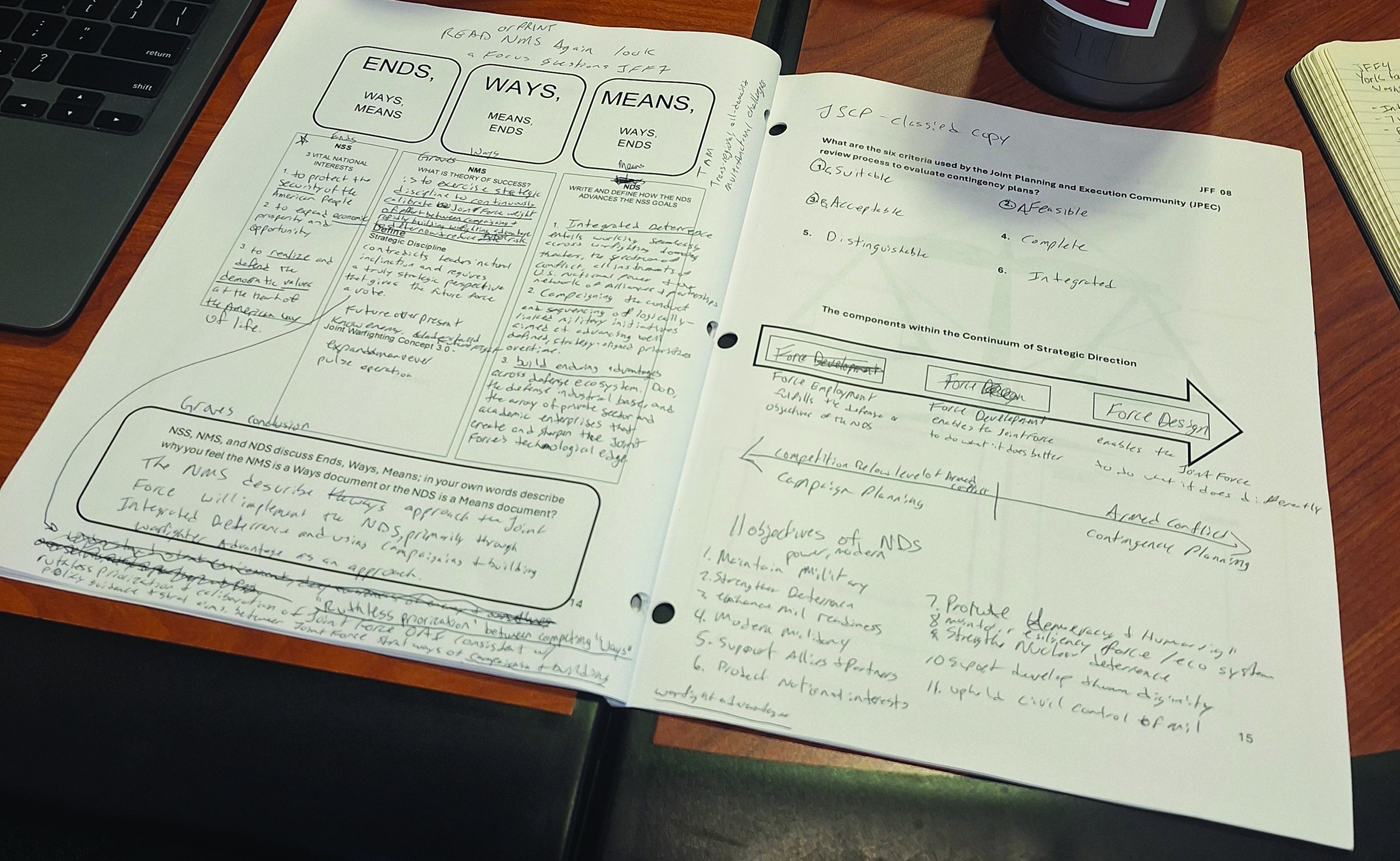
Source: courtesy of the authors.
Accelerated courses often leverage digital platforms; most assigned readings are in digital format, making note-taking difficult for some students. By moving away from long-form reading in print, students may be taking less meaningful notes, further reducing the beneficial connection between reading and writing.[20] The increased use of digital materials in traditional and accelerated graduate programs creates challenges. Studies have shown a decrease in student text coherence when comparing digital displays to print materials.[21]
The shift to digital does have several benefits, one of which is that some students prefer taking notes on laptops. However, longhand note-taking is shown to engage the students’ external storage and superior encoding functions more than laptop note-taking.[22] A further challenge with digital display material is taking helpful notes while reading. Because digital materials are available anytime, students often choose to forgo note-taking, losing the proven benefits that the physical act brings to their learning.[23] When students were forced to highlight and annotate digital and print readings, they preferred to use pen and paper because it was easier and faster—the “laptop is not the most adequate device for taking notes in courses.”[24]
Active Learning Tools
One effective way to shift learning from a passive to an active approach is to create opportunities for students to engage directly with course material and lectures. Active learning is a pedagogical approach that fosters engagement, innovation, and reflection by positioning students as active participants in the construction of knowledge. Research indicates that passive methodologies, such as classroom lectures, are less effective in developing critical thinking skills in students compared to active learning methods.[25] For adult learners, these activities must be grounded in the principles of andragogy to be effective. It is essential to clarify what they need to learn, offer autonomy and agency in the process, acknowledge their prior experiences, and clearly connect learning outcomes to tangible benefits. Although this can be a challenging task, the use of interactive tools and graphic organizers can greatly support and enhance the process.
However, interactive and graphic organizers are only for children, right? Studies show that using organizers benefits both children and adult learners, so why are these beneficial tools often seen as just for children? First, there is limited research on the effects of interactive organizers with adults in the classroom. Kimberly Hardin pointed to a single 2007 study by Melanie G. Narkawicz and DiAnn B. Casteel that found students instructed using interactive organizers in a social studies classroom retained more information and had greater impact on the learning process than those who were instructed using traditional textbook methods.[26] Additionally, interactive organizers “encourage student ownership of study material, provide a kinesthetic component to teaching strategies, and promote long-term retention of academic lessons.”[27] Some higher education research has explored the use of paper folding (origami) as a tool for active, hands-on learning; however, foldable interactive organizers, as commonly used in K–12 education, are mostly underexplored in college classrooms.
A decline in hands-on, tactile learning in graduate courses also leads to a misconception that interactive and graphic organizers are simplistic and lack the rigor necessary for the academic depth, complexity, and higher-order cognitive skills required for graduate school learning. Reinforcing the idea that these active-learning tools are only for children may come from the commercial education industry.
Foldables® (referred to in this study as interactive organizers) are three-dimensional instructional tools developed and marketed by Dinah Zike. Initially created as a study aid for her own use, Zike found them beneficial for tutoring college students with learning disabilities. Although she first used them in a college setting, she later marketed them successfully to elementary and middle school teachers.[28] The vibrant colors and hands-on assembly aspect are often associated with early childhood development, but these tools are applicable to all age groups.
Zike also organized her Foldables® into notebooks as students progressed through lessons. Although the use of notebooks and workbooks is not new and has been part of problem-based learning (PBL) for centuries, modern workbooks have gained popularity in K–12 and adult education.[29] An internet search revealed more than 300,000 workbooks available on various topics, showcasing their resurgence in education, particularly since the late twentieth century onward. Educational workbooks have been used in vocational training and other fields since the 1920s.
The JFF Workbook: A Tool to Increase Active Learning
This study investigates the impact of using a workbook with interactive and graphic organizers on students’ perceptions of course material and note-taking organization. The study was based on a 24-page booklet containing graphic and interactive organizers, designed to enhance the nine-day coursework and guide students through the lessons. The central question for this study is: Did the adult JPME students perceive that using the workbook improved their learning experience, increased their knowledge retention, and helped them prepare for summative assessments?
Each student received an 8.5 x 11-inch booklet with 24 pages of interactive organizers and 14 graphic organizers. The faculty were also given an instructor’s version of the workbook, containing suggested answers to the structured questions and notes for faculty regarding the use of the workbook or areas that required special emphasis. The delivery mode of the lessons was also taken into consideration. Most faculty used either the provided PowerPoint slides and a mini-lecture with discussion or a discussion-only approach. The workbook’s graphic and interactive organizers were designed to support both modes of delivery across the 16 lessons by intermixing three-, four-, and five-tab interactive organizers, label diagram style, compare-and-contrast charts, cloze activities, flowcharts, concept maps, sequence charts, and free-form graphic organizers.
The interactive organizers were preassembled for the students and placed into 3 x 8-inch and 5 x 8-inch pockets. Graphic organizers and synthesis questions were strategically arranged within the workbook pages, creating space for the pockets that held the interactive organizers. The pockets also acted as a mini-graphic organizer, asking questions about the interactive organizers’ content. Blank spaces were placed in strategic areas of the workbook pages for students to take additional notes during formal lectures or seminar discussion sessions. Assembling the 138 student and 48 faculty workbooks before each course took a total of 44 hours.
Figure 2. The JFF Workbook: Designing, building, and using the books
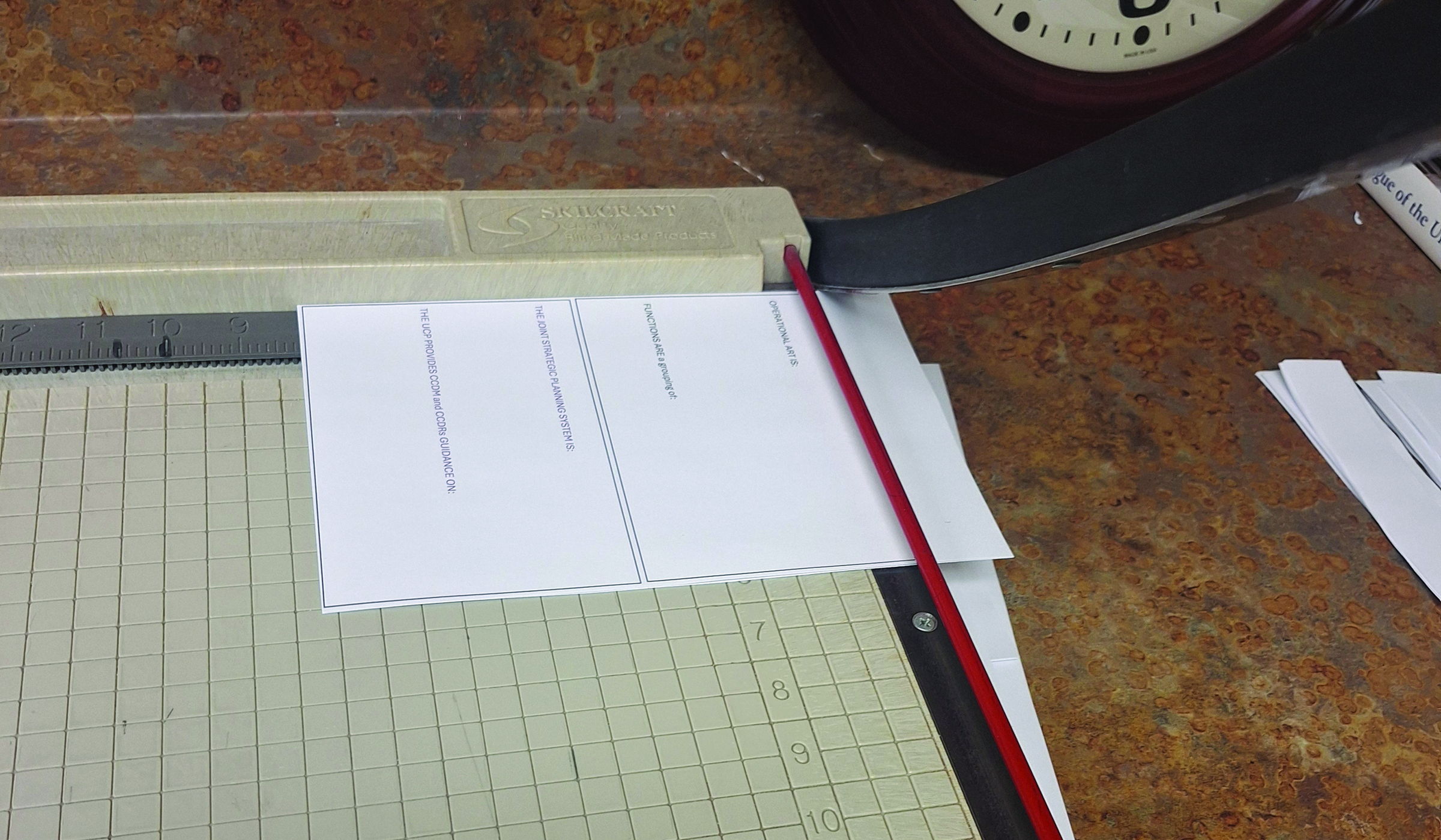
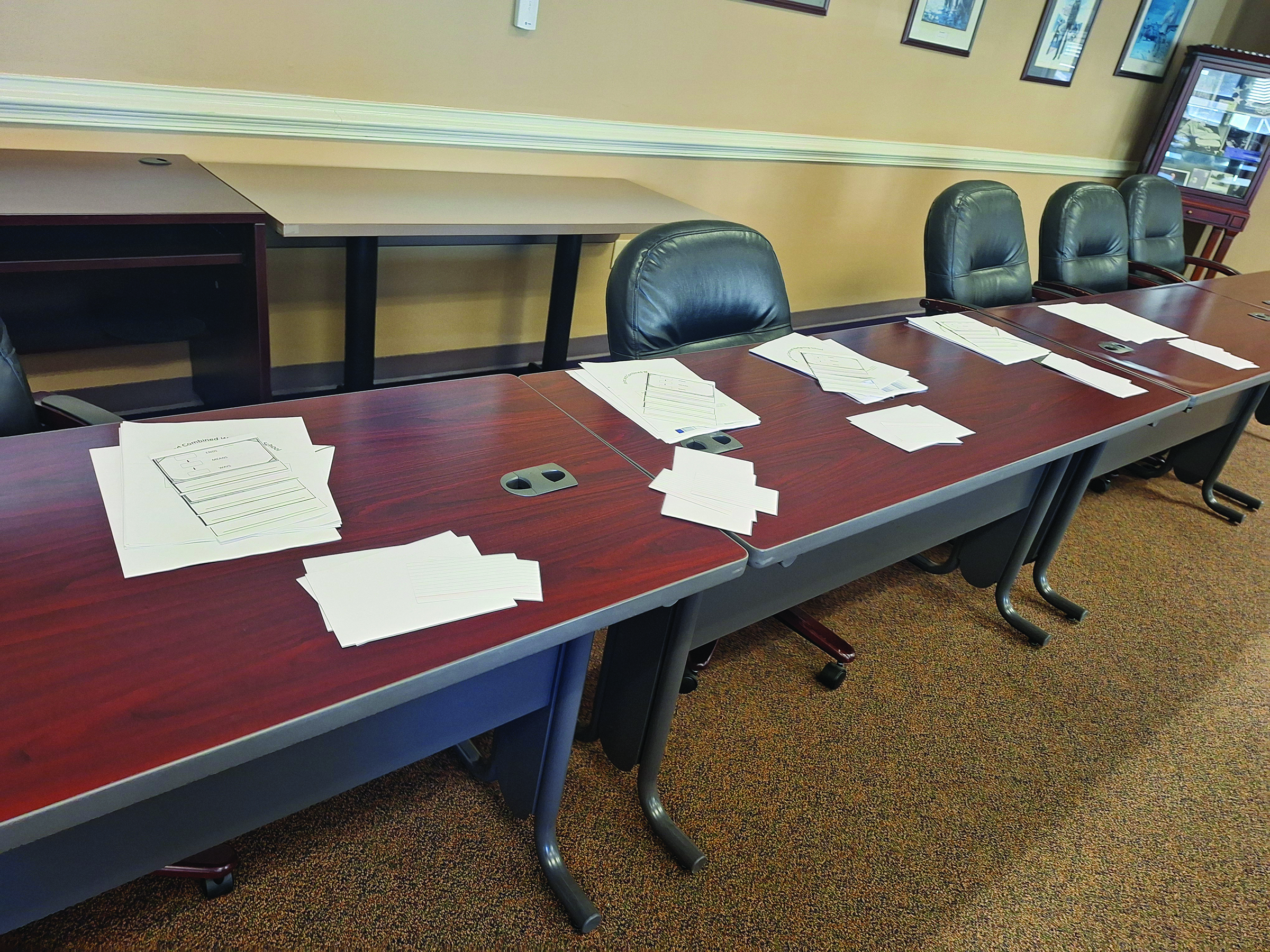
Source: courtesy of the authors
Instructors used the workbook in several ways. For example, before a lesson, students might be asked to complete a table in the workbook as preparation and then use their answers in a seminar conducted in a small group discussion. The workbook helped instructors guide the seminar discussion by referring to questions in the workbook that drove the discussion toward critical elements of the lesson’s learning outcomes. The students captured their thoughts and observations during or after the discussion in the note-taking spaces of the workbook. Similarly, students could take the workbook to large-group lectures to take notes. The workbook also helped the students reflect on readings, lectures, and discussions. For instance, a question in the workbook may ask students to use their own words to synthesize several concepts in their written response. The workbook provides formative and summative assessment opportunities. To illustrate the point, an instructor might use it as a review tool or select a question, ask probing questions, and conduct a knowledge check or formative learning assessment. Students used the workbook to prepare for and take the summative assessment, a 25-question multiple-choice exam.
Using interactive and graphic organizers to create active learning opportunities is neither a new concept nor is using notebooks or workbooks. The JFF Workbook combined interactive and graphic organizers with active learning teaching strategies and student learning preferences. In practice, the JFF Workbook became a mechanism to transition from passive to active learning, from lecture-reliant to accelerated adult learning.
Approaches to increasing active learning in passive environments have focused on boosting participation during classroom discussions and promoting small-group activities in different formats. Others have used problem-based learning (PBL) and created their own learning materials. Rangun Nathan enhanced basic engineering teaching by using mini-lectures, small group work, and fill-in worksheets to make fundamental engineering math more engaging. The worksheets played a crucial role in Nathan’s active learning approach by increasing engagement with the material and peers, while also facilitating differentiated instruction.[30]
Andrea L. Fisher assembled several custom graphic organizers into a notebook. Her study demonstrates a similar method to the one presented here. Fisher’s graphic organizers focused on key concepts, the main text of the textbook, and the learning outcomes aimed for in an instructional segment. The notebook’s structure divided the content into clear units, motivating and encouraging the student. Fisher used the notebook to review material and prepare the student for assessments. “Chunking” the material also created a framework that improved the instructor’s lesson organization and classroom setting.[31]
Methodology
One hundred fifteen students and faculty members from 11 JCWS resident course seminars participated in the workbook study during the course of one year (March 2024–March 2025). The students were mid-career officers, O4 to O6 in rank, with approximately 12–20 years of service, and between their late 30s and early 50s in age. A few senior enlisted personnel of similar age and years of experience also took the course. Many of the students arrived having already completed a master’s degree, while others were returning to the classroom after more than a decade away. If the workbooks were viewed as effective by a population of adult military professionals, it is likely that they would also be effective with a similar civilian post-graduate and undergraduate population.
Some JCWS instructors were skeptical of the workbook and interactive organizers as suitable for adults. Teams of three instructors taught the JCWS course, with one guiding specific lessons or blocks of instruction using a standard syllabus. The course was conducted in a seminar format with 15–18 students, using discussion-based learning. It emphasized the integrated creativity of operational art alongside the analytical and logical processes of operational design as frameworks for developing theater strategies and Joint operational plans in a complex global environment.
Participation in the study was voluntary and at the discretion of the faculty. Eleven faculty teams and 138 students participated. Only the authors had prior experience with the workbook, having used a pilot version during two earlier seminars. They invited students who took part in a seminar using the workbook to complete a survey about their preferences and perceptions of its use. They also surveyed all the instructors who used the workbook regarding their experiences; seven of them completed the surveys.
The survey included demographic questions and provided space for open-ended comments. The survey also asked the faculty to select their level of agreement using a four-point Likert scale to the following 10 statements:
1. Using the workbook helped me understand /comprehend JFF lesson concepts/definitions,
2. I felt the interactive organizers were appropriate for the JFF course,
3. I felt that the Unified Action (JFF 1) and Ethics (JFF 14) interactive organizers were effective at improving my understanding,
4. I felt that the Strategic Documents (JFF 7, 8, 9) interactive organizers were effective at improving my understanding,
5. I felt that the Global Force Management graphic organizer was effective at improving my understanding,
6. Using the workbook made me feel more confident in my understanding JFF concepts/definitions when preparing for the JFF exam,
7. The workbook made me more confident in taking the JFF exam,
8. I feel the Workbook will help me retain and recall JFF concepts/definitions, and
9. I feel that the workbook concept be useful in my other classes.
The instructors were asked similar questions designed to assess their students’ motivation and engagement, their level of workbook usage, and whether the workbook impacted the delivery of the material, seminar discussion, and the students’ preparation for the JFF course exam.
Basic descriptive statistics summarized the quantitative data results. Using the principles of qualitative thematic analysis in Virginia Braun and Victoria Clarke.[32] Thematic analysis was chosen due to the size of the dataset and the interest in inductively identifying common themes and tone.
Results
Student Survey Results
A total of 108 of the 138 participating students completed the survey (78 percent response rate). Respondents were primarily military officers or Department of Defense civilians, with 81 percent identifying as male and 82 percent younger than 45 years. More than one-half (56 percent) reported no prior experience with graphic or interactive organizers, while the remainder had encountered them primarily during their K–12 education.
Table 1. Were the workbooks helpful?
|
|
Q2.
Helped comprehend concepts
|
Q6.
Helped when preparing for the exam
|
Q7.
Helped when taking the exam
|
Q8. Helped me retain concepts
|
Q9.
Useful in other classes
|
|
Mean
|
3.2
|
3.2
|
3.4
|
3.1
|
3.2
|
|
Percent agree
|
89%
|
85%
|
88%
|
83%
|
88%
|
|
Percent disagree
|
11%
|
15%
|
12%
|
18%
|
12%
|
Source: courtesy of the authors.
Overall, students reported favorable perceptions of the workbook. As shown in table 1, 83–89 percent of respondents agreed that the workbook improved their understanding of course concepts, supported exam preparation, increased confidence during the exam, enhanced retention of key concepts, and would be useful in other courses. Mean ratings ranged from 3.1 to 3.4 on the 4-point scale. Student comments suggest that the workbook’s value stemmed from its ability to organize note-taking, highlight key concepts, and provide a structured framework for engaging with readings, lectures, and discussions. Several respondents noted that the workbook helped them focus on essential content and served as a convenient reference during exam preparation.[33] These observations align with the increased retention noted by Narkawicz and Casteel in their 2012 study.[34]
Another theme that emerged from the student comments was the value of having a tangible, hands-on learning resource. Several participants noted that they appreciated the workbook’s tactile format and the ability to revisit their notes throughout the course. Students described the workbook as promoting active engagement with the material and helping them organize their learning by taking notes and identifying key concepts.[35]
Several respondents described the workbook as a useful study guide that consolidated key concepts and personal notes into a single reference tool. Students also viewed the workbook as a useful assessment aid: 85 percent agreed it helped them prepare for the JFF examination, and 88 percent reported that it increased their confidence during the exam. Many participants described the workbook as a concise review tool that consolidated important definitions, concepts, and personal notes into a single resource. The workbook’s structure, along with students’ note-taking and question-answering, provided a convenient guide that students could “pull out and flip through” during exam preparation and a quick reference during the exam.
Qualitative Themes from Student Comments
Written comments were provided by 82 students. The authors independently and holistically coded the comments, first using open coding, then developing thematic codes. ChatGPT was also used to code the comments. The human and AI results were similar enough to be combined into two primary themes: 1) support for learning and assessment preparation; and 2) implementation and usability challenges.
Students responded positively to the specific graphic and interactive organizer formats, and the qualitative findings were consistent with students’ quantitative ratings of the instructional materials (table 2). The authors’ findings reinforce and support Steimle et al. and Stacy et al.’s conclusion that students prefer taking long-hand notes, as several offered:[36]
I loved having a physical, tactile workbook to hold in my hands and plenty of space for fill-in-the-blank answers and freehand notes.[37]
Table 2. Effectiveness of interactive and graphic organizer formats
|
|
Q1.
Interactive organizers were appropriate for the course
|
Q3.
Three-tab interactive organizers were effective
|
Q4.
Five-tab “Flipbook” interactive organizers were effective
|
Q5.
Concept-map style graphic organizer was effective
|
|
Mean
|
3.2
|
3.1
|
3.2
|
3.0
|
|
Percent agree
|
89%
|
82%
|
88%
|
80%
|
|
Percent disagree
|
11%
|
18%
|
12%
|
20%
|
Source: courtesy of the authors.
Nine students commented on the use of the workbook when preparing for and taking the exam, particularly using the workbook as a “quick reference” of definitions to review and study because they had to “formulate and rewrite” the definitions and concepts. The students also appreciated the hard copy workbook for its ease of use, as it included personal notes that helped them recall information.[38]
Students also frequently described the workbook as an effective study resource. Many reported using it as a concise review guide when preparing for the JFF examination because it combined course concepts, definitions, and personal notes in a single location.
Representative comments included:
I think the workbook helped focus my reading.
I loved having a physical, tactile workbook to hold in my hands and plenty of space for fill-in-the-blank answers and freehand notes.
Implementation and Usability Challenges
Student comments highlighted that how the workbook was used by the faculty mattered. Part of the original research framing began from a perspective that adults would not like interactive organizers, as they might be seen as “childish,” and a few respondents in this study also noted this. However, as table 2 shows, most found the interactive organizers helpful. Students did identify several implementation challenges. The most common concerns involved varying levels of instructor integration of the workbook. Some respondents reported difficulty determining when workbook sections should be completed or how certain interactive elements are related to classroom activities.[39]
Another challenge for the students was the workbook’s questions and note-taking prompts. The questions were designed to be nongenerative and generative, helping the students move from a relatively shallow cognitive processing of verbatim notes toward synthesis and the greater encoding benefits of deep information processing.[40] Because the workbook layout did not match, the interactive organizers were new to many, and the questions were synthesis-focused, it fell to the instructors to integrate the workbook into the course. The integration was done well by some instructors but not by all. Nine students (11 percent who commented) wanted better integration of the workbook. Part of the integration desired was providing a “clearer explanation/understanding of the handouts in the workbook” and how to use them. Students offered that they need the instructors to “prompt” them as to when a portion of the workbook was relevant to the discussion or lecture, “otherwise it [the workbook] doesn’t get completely filled out.” One student summed up the workbook integration by saying, “It was effective when I remembered to use it.”[41] Some instructors recognized the critical nature of integrating the workbook: “I am not convinced I placed enough emphasis on completing the Workbook sections at the end of each class.”[42] The integration of the workbook was also important to prevent a type of overload that students may experience when having multiple products in too many locations. One student offered that,
If you’re going to create a workbook, then teach from it or have it where you’re filling it in as we go. Going from my notes, to slides to workbook while in class usually had me behind in keeping pace with the information being presented.[43]
Other students found that they preferred to take digital notes. For this study, the authors chose to use a hardcopy workbook, recognizing that many students might prefer a digital version. When students in this study were asked, 26 percent wanted a digital version of the work, 37 percent did not, while the remaining 37 percent wanted both a digital and hardcopy workbook. Twelve students (14 percent who commented) noted that they would prefer a digital version of the workbook, wishing it to be on the same medium as the digital readings or to be compatible with commercial note-taking software (e.g., Notion, Obsidian, Roam, Logseq, and OneNote). Students cited that taking digital notes makes it “easier to collect and organize my thoughts/notes,” and some went to “recreating many of the workbook pages in my own notes.”[44]
For the last quarter of this study, the authors provided only an Adobe fillable digital version of the workbook to the author’s seminar. Three students immediately asked for a hard copy of the workbook. Of the students who used the digital version, seven also requested a hardcopy. As with the hardcopy version, some students found the digital version’s quality problematic; some of the digital fillable boxes lacked sufficient space. Other fillable boxes were cumbersome to use. The students’ perception of a lack of digital and hardcopy space for note-taking may align with observations by Mueller and Oppenheimer, who found in their 2014 study that participants who took long-hand notes wrote significantly fewer words than those who took digital notes on a laptop.[45]
Faculty Perceptions
Seventeen faculty members completed the instructor survey. Faculty responses were generally positive and closely aligned with student perceptions. As shown in table 3, 88–94 percent of instructors agreed that the workbook was appropriate for the course, supported seminar discussions, assisted lesson preparation, and would be used again.
Table 3. Faculty perceptions of workbook effectiveness
|
|
Q1.
I felt the workbook was appropriate for the JFF course
|
Q2.
The workbook helped me
engage with
the seminar
discussion
|
Q3.
Using the
workbook helped me prepare my lessons
|
Q4.
I would
use the
JFF Workbook again
|
|
Mean
|
3.5
|
3.2
|
3.2
|
3.2
|
|
Percent Agree
|
94%
|
94%
|
94%
|
88%
|
|
Percent Disagree
|
6%
|
6%
|
6%
|
12%
|
Source: courtesy of the authors.
Faculty comments emphasized three primary benefits. First, instructors reported that the workbook highlighted key learning outcomes and provided a common framework for classroom discussions. Second, they found it useful for conducting review activities and preparing students for assessments. Third, several instructors noted that the workbook provided flexibility when lesson schedules changed or instructional adjustments became necessary.
Faculty also identified implementation challenges similar to those reported by students. Several noted that successful use of the workbook depended on deliberate integration into lesson plans and seminar discussions. Others observed that incorporating the workbook required modifications to established teaching practices.
Summary of Findings
The analysis suggests that the interactive and graphic organizers workbook enhances interactive learning in accelerated courses, which concurs with the findings of Casteel, Narkawicz, Alvi Raihan Utami, Dyah Aminatun, and Nina Fatriana.[46] Furthermore, the study supports the six principles of the andragogy model and the ideas of andragogic instructional practices, providing a practical approach to enhance active learning in adult learning settings.
The students in the study were more positive than negative in their assessment of the workbooks, pointing to their role in emphasizing key learning points and helping them prepare for and take the summative exam. Faculty members also reported that the workbook helped them prepare lessons, guide discussions, easily adapt to changing teaching schedules, and assist students in preparing for exams. These observations contribute to the understanding of how to promote interactive learning for adults participating in accelerated graduate courses, providing instructors with an effective tool.[47]
Research indicates that interactive and graphic organizers, whether used individually or assembled into notebooks or workbooks, are an effective pedagogical approach to promoting active learning in K–12 institutions.[48] There has also been research examining their use at the college level, particularly to incorporate active learning into traditional methods such as lectures, PowerPoint-centric presentations, and numerous assigned readings within an accelerated course.[49] Still, studies of adult military populations are limited; the success of the workbooks with this group of students, who are older than most graduate students previously studied, suggests that these techniques are effective for this adult population as well as younger adults.[50] The findings suggest that using interactive and graphic organizers and workbooks has universal appeal in pedagogical and andragogical settings.
The JFF Workbook resonated with these adult students because it was active learning within a transactional learning setting. Malcolm Knowles, Elwood Holton, and Richard Swanson offer that a learning “transaction” is a core principle of adult learning and can be leveraged to make the process more effective for adults.[51] Andragogy is both humanistic and pragmatic, as adults can self-actualize, recognizing the value of knowledge gained from experience rather than relying solely on formal authority. The JFF Workbook activates the six core adult learning principles, which include readying the student, then orienting and motivating them to learn, hitting three of the six principles of andragogy.[52] Closing the loop on the principles, the workbook’s link to the summative assessment provided a guide to what they needed to know, while creating a framework that helped them put their prior experience and self-concept of learning into context, completing the learning transaction.[53]
It is the transactional nature of andragogy that makes the workbook successful. A lack of understanding by instructors about how to use the workbook for formative assessments or in creative ways, such as fostering note-taking by assigning completion of graphic organizers while reading, and inconsistent integration, were problems. The students recognized the lack of integration, and so too did the instructors. This observation underscores the need for enhanced faculty development for instructors teaching adult courses. Being an expert in a topic does not equate to the acumen required to implement andragogical practices effectively in the seminar room. Nor does a workbook alone automatically lead to active learning.
Third, the concern that interactive and graphic organizers are just for children is unfounded. When this study began, there was concern that the JCWS course population was significantly older than that of traditional graduate students by 10 years or more. Some faculty members believed that these older adult learners would find the interactive organizers to be “pedagogical and childish,” as one instructor said.[54] Interestingly, of the students who responded that they disliked the workbook, 46 percent were younger than 40 years of age. Most of the “dislike” responses focused on the desire for a digital version of the workbook. Interactive, organizer-style preference questions revealed that most were liked, but without strong enthusiasm (strongly dislike or like), with an 18 percent dislike rate across the organizer styles, aligning with the population’s age distribution. The authors hypothesized that younger students would likely have used the tools before, giving them a greater affinity for them than older students, though the results did not show this in a significant way.
The workbook was designed to consider multiple learning preferences, which may explain its appeal to the students in the study. One challenge is the time commitment; the development and construction of the workbooks took the authors 44 hours, too much time for instructors whose preparation time is also compressed by the accelerated course model. Generative artificial intelligence (AI) engines may be the solution to the timely creation, implementation, and integration of these andragogical tools. Since the conclusion of the study, the authors have used ChatGPT and CoPilot to generate graphic organizers for the curriculum and certain assigned readings. Students requested digital versions of the workbook during the study, but just as many expressed a preference for the hardcopy version. The study reinforces the benefit of longhand note-taking as seen in studies by Mueller and Oppenheimer and by Stacy and Cain.[55] Although AI may be used to create graphic organizers and workbooks, best practice points to offering students hard-copy products that encourage the benefits of reading, listening, and writing found in note-taking.
Conclusion
This study demonstrates that interactive and graphic organizers, long considered tools for younger learners, are not only appropriate but also highly effective in adult, graduate-level education, particularly in accelerated learning environments such as the Joint Forces Staff College. The JFF Workbook combined structured graphic organizers with interactive elements, providing a tangible, learner-centered resource that enhanced comprehension, supported note-taking, and increased student engagement.
The overwhelmingly positive feedback from students and faculty suggests that these tools help bridge the gap between passive and active learning. They offer a practical application of andragogical principles by promoting autonomy, leveraging prior experience, and aligning with diverse learning preferences. Notably, the workbook supported formative and summative assessment preparation, reinforcing its value as a comprehensive learning aid.
While some challenges remain, such as ensuring consistent faculty integration, refining the workbook’s physical and digital formats, and improving alignment between the workbook, lectures, and discussions, the results affirm that interactive and graphic organizers are not just for children. They are powerful cognitive learning strategies that can transform adult education by making learning more visual, tactile, and reflective.
As graduate programs, especially accelerated ones, evolve and adapt to the needs of diverse adult learners, tools like the JFF Workbook offer a scalable, research-informed approach to improving comprehension, retention, and learner confidence. Future research should explore broader applications across disciplines and institutions, as well as the long-term impact on knowledge transfer and professional practice.
Endnotes
[1] Melanie G. Narkawicz and DiAnn B. Casteel, “Improving Accelerated College Courses: How Foldable® Graphic Organizers Can Help Learners Retain Information,” Delta Journal of Education 2, no. 2 (2012): 374–76.
[2] Combined Joint Chiefs of Staff Instruction (CJCSI) 1800.01G, Officer Professional Military Education Policy (Washington, DC: Joint Chiefs of Staff, 15 April 2024).
[3] Barbara G. Tanenbaum et al., “How to Make Active Learning Work for You,” Radiologic Technology 69, no. 4 (1998): 374–76.
[4] Joan Johnson-Freese, Educating America’s Military (London and New York: Routledge, 2012).
[5] Gal Ben-Yehudah and Yoram Eshet-Alkalai, “The Influence of Text Annotation Tools on Print and Digital Reading Comprehension,” in Proceedings of the 9th Chais Conference for the Study of Innovation and Learning Technologies: Learning in the Technological Era, eds., Y. Eshet-Alkalai et al. (Raanana: Open University of Israel, 2014), 2838–42.
[6] Will Mason and Meesha Warmington, “Academic Reading as a Grudging Act: How Do Higher Education Students Experience Academic Reading and What Can Educators Do about It?,” Higher Education 88, no. 3 (2024): 839–56, https://doi.org/10.1007/s10734-023-01145-2.
[7] Narkawicz and Casteel, “Improving Accelerated College Courses.”
[8] Combined Joint Chiefs of Staff Instruction (CJCSI) 1800.01G, Officer Professional Military Education Policy, A-B-6.
[9] Malcolm S. Knowles, Elwood F. Holton, and Richard A. Swanson, The Adult Learner: The Definitive Classic in Adult Education and Human Resource Development (Boston, MA: Taylor & Francis, 2005).
[10] “Characteristics of Postsecondary Students,” in Condition of Postsecondary Education (Washington, DC: National Center for Education Statistics, Department of Education, 2021).
[11] Knowles, Holton, and Swanson, The Adult Learner.
[12] Richard Cartor, “A Comparison of Andragogy and Pedagogy: Assessing the Relationship between Individual Personality Differences, Learning Styles, and Training Types” (PhD diss., University of Tennessee, 1990); and Knowles, Holton, and Swanson, The Adult Learner.
[13] Tanenbaum et al., “How to Make Active Learning Work for You”; Henk G. Schmidt et al., “On the Use and Misuse of Lectures in Higher Education,” Health Professions Education 1, no. 1 (2015): 12–18, https://doi.org/10.1016/j.hpe.2015.11.010; and Héctor R. Ponce et al., “Adding Interactive Graphic Organizers to a Whole-Class Slideshow Lesson,” Instructional Science 46, no. 6 (2018): 973–88, https://doi.org/10.1007/s11251-018-9465-1.
[14] Steven Johnson, “The Fall, and Rise, of Reading,” Chronicle of Higher Education, 21 April 2019; Ben-Yehudah and Eshet-Alkalai, “The Influence of Text Annotation Tools on Print and Digital Reading Comprehension,” 2838–42; and Mason and Warmington, “Academic Reading as a Grudging Act,” 839–56.
[15] Bonnie J. F. Meyer, David M. Brandt, and George J. Bluth, “Use of Top-
Level Structure in Text: Key for Reading Comprehension of Ninth-Grade Students on JSTOR,” Reading Research Quarterly 16, no. 1 (1980): 72–103, https://doi.org/10.2307/747349.
[16] Rosalind Horowitz, “Text Patterns: Part II,” Journal of Reading 28, no. 6 (1985): 534–41.
[17] Donna E. Alvermann, “The Compensatory Effect of Graphic Organizer Instruction on Text Structure, ” Journal of Educational Research 75, no. 1 (1981): 44–48, https://psycnet.apa.org/doi/10.1080/00220671.1981.10885354.
[18] Mary W. Olson and Bonnie Longnion, “Pattern Guides: A Workable Alternative for Content Teachers,” Journal of Reading 25, no. 8 (1982): 736–41.
[19] Nancy W. Fordham, Debra Wellman, and Alexa Sandmann, “Taming the Text: Engaging and Supporting Students in Social Studies Readings,” Social Studies 93, no. 4 (July–August 2002): 149–58.
[20] Naomi S. Baron and Anne Mangen, “Doing the Reading: The Decline of Long Long-Form Reading in Higher Education,” Poetics Today 42, no. 2 (2021): 253–79, https://doi.org/10.1215/03335372-8883248.
[21] Nicole Lewis and Venise Bryan, “Andragogy and Teaching Techniques to Enhance Adult Learners’ Experience,” Journal of Nursing Education and Practice 11, no. 11 (July 2021): 31, https://doi.org/10.5430/jnep.v11n11p31; and Tirza Lauterman and Rakefet Ackerman, “Overcoming Screen Inferiority in Text Learning,” Proceedings of the Annual Meeting of the Cognitive Science Society 35 (2013).
[22] Pam A. Mueller and Daniel M. Oppenheimer, “The Pen Is Mightier than the Keyboard: Advantages of Longhand over Laptop Note Taking,” Psychological Science 25, no. 6 (2014): 1159–68, https://doi.org/10.1177/0956797614524581.
[23] Elizabeth Moore Stacy and Jeff Cain, “Note-Taking and Handouts in the Digital Age,” American Journal of Pharmaceutical Education 79, no. 7 (2015): 107, https://doi.org/10.5688/ajpe797107.
[24] Jurgen Steimle, Iryna Gurevych, and Max Mühlhäuser, “Notetaking in University Courses and Its Implications for eLearning Systems” (conference paper, The 5th e-Learning Fachtagung Informatik (DeLFI 2007) of the Gesellschaft für Informatik, Siegen, Germany, 17–20 September 2007).
[25] Lewis and Bryan, “Andragogy and Teaching Techniques to Enhance Adult Learners’ Experience,” 31.
[26] Kimberly A. Hardin, “Effects of Foldables on Teacher Instruction” (diss., Baylor University, 2016).
[27] DiAnn B. Casteel and Melanie G. Narkawicz, “Effectiveness of Foldables versus Lecture/Worksheet in Teaching Social Studies in Third Grade Classrooms,” Forum on Public Policy: A Journal of the Oxford Roundtable, no. 3 (Summer 2007).
[28] Dinah Zike, Dinah Zike’s Notebook Foldables for Binders, Spirals, and Composition Books: Strategies for All Subjects: Grades 4–College, 1st ed, (San Antonio, TX: Dinah-Might Adventures, 2011).
[29] Rungun Nathan, “Fill-in Worksheets: A Tool to Increase Student Engagement” (conference paper, Proceedings of the 2010 ASEE Annual Conference & Exposition, Louisville, KY, 20–23 June 2010), 15.582.1–15.582.7; Orley L. Duffin, “An Evaluation of a Workbook Method of Instruction in Engineering Drawing for High School Pupils” (masters diss., University of Massachusetts Amherst, 1943); and Philip E. Wollock, “A Workbook in Basic Mechanics to Meet the Needs of Special Class Boys” (course paper, Boston University’s School of Education, 1952).
[30] Nathan, “Fill-in Worksheets.”
[31] Andrea L. Fisher, “Implementing Graphic Organizer Notebooks: The Art and Science of Teaching Content,” Reading Teacher 55, no. 2 (2001): 116–20.
[32] Virginia Braun and Victoria Clarke, “Using Thematic Analysis in Psychology,” Qualitative Research in Psychology 3, no. 2 (2006): 77–101, https://doi.org/10.1191/1478088706qp063oa.
[33] Student responses were provided anonymously using a Microsoft Forms survey that collected data from April–October 2024, hereafter student Forms response, April–October 2024.
[34] Narkawicz and Casteel, “Improving Accelerated College Courses.”
[35] Student survey responses in the Quality, Design, and Usability code, April–
October 2024 and January 2025.
[36] Stacy and Cain, “Note-Taking and Handouts in the Digital Age”; and Steimle, Gurevych, and Mühlhäuser, “Notetaking in University Courses and Its Implications for eLearning Systems.”
[37] Student survey response, 27 January 2025.
[38] Student responses, Preparing and Taking the Exam code, April–October 2024.
[39] Student responses, Instructor Integration and Classroom Implementation code, April–October 2024 and January 2025.
[40] Mueller and Oppenheimer, “The Pen Is Mightier than the Keyboard,” 1159–68.
[41] Student responses, 11 July 2024 and 25 April 2024.
[42] Faculty surveys were anonymous as well. Faculty comment, 1 October 2024.
[43] Student response, 28 January 2025.
[44] Student response, 28 January 2025.
[45] Mueller and Oppenheimer, “The Pen Is Mightier than the Keyboard.”
[46] Casteel and Narkawicz, “Effectiveness of FoldablesTM Versus Lecture/Worksheet in Teaching Social Studies in Third Grade Classrooms”; Narkawicz and Casteel, “Improving Accelerated College Courses”; Alvi Raihan Utami et al., “Student Workbook Use: Does It Still Matter to the Effectiveness of Students’ Learning?,” Journal of English Language Teaching and Learning 1, no. 1 (2020): 7–12, https://doi.org/10.33365/jeltl.v1i1.247.
[47] Utami, Aminatun, and Fatriana, “Student Workbook Use,” 7–12.
[48] Fisher, “Implementing Graphic Organizer Notebooks”; Utami, Aminatun, and Fatriana, “Student Workbook Use”; Nathan, “Fill-in Worksheets”; and Alvermann, The Compensatory Effect of Graphic Organizer Instruction on Text Structure.
[49] Narkawicz and Casteel, “Improving Accelerated College Courses”; Tanenbaum et al., “How to Make Active Learning Work for You”; Stacy and Cain, “Note-Taking and Handouts in the Digital Age”; and Whitney Berry, “Surviving Lecture: A Pedagogical Alternative,” College Teaching 56, no. 3 (2008): 149–53, https://doi.org/10.3200/CTCH.56.3.149-153.
[50] Bryan Leese and Amanda M. Rosen, “Increasing Inclusion in Classroom Discussion: The Raised Block as a Classroom Response System in International Studies,” International Studies Perspectives 26, no. 2 (May 2025): 140, https://doi.org/10.1093/isp/ekae004.
[51] Knowles, Holton, and Swanson, The Adult Learner.
[52] Knowles, Holton, and Swanson, The Adult Learner.
[53] Knowles, Holton, and Swanson, The Adult Learner.
[54] This comment was made to the author during the delivery of the study’s proposal to the JCWS faculty in November 2023.
[55] Mueller and Oppenheimer, “The Pen Is Mightier than the Keyboard”; and Stacy and Cain, “Note-Taking and Handouts in the Digital Age.”