China Military Studies Review
From Pandemic to Purges
China's Military Diplomacy from 2018 to 2025
Phillip C. Saunders, PhD, and Samuel King
15 July 2026
https://doi.org/10.33411/cmsr2026.02.005
PRINTER FRIENDLY PDF
EPUB
AUDIOBOOK
Abstract: The People’s Liberation Army (PLA) uses military diplomacy to support Chinese foreign policy, build positive relations with other militaries, and promote modernization. This article draws on a National Defense University dataset that tracks all PLA senior officer meetings with foreign counterparts, combined military exercises, and overseas port calls by PLA Navy ships from 2002 to 2025. It documents a steep COVID-19 related decline in military diplomatic engagements from 2020 to 2022, followed by a rebound after 2023. There was a significant drop in senior leader engagements in 2025 due to ongoing PLA purges, which will curtail Chinese military diplomacy until permanent replacements are named.
Keywords: People’s Liberation Army, PLA, China, military diplomacy, corruption, COVID-19, pandemic, foreign policy, multilateral, combined exercises, port calls
The People’s Liberation Army (PLA) has historically been insular and secretive, but during the last several decades, the Chinese military has become increasingly active in engaging foreign militaries.[1] The PLA defines military diplomacy as “external relationships pertaining to military and related affairs between countries and groups of countries, including military personnel exchange, military negotiations, arms control negotiations, military aid, military intelligence cooperation, military technology cooperation, international peacekeeping, military alliance activities, etc.”[2] The PLA uses military diplomacy as a tool to support Chinese foreign policy, build positive relations with other militaries, and promote military modernization by learning from advanced militaries and militaries with recent combat experience. Military diplomacy has become an integral component of China’s broader diplomatic efforts.
Military diplomacy can include many different types of interactions between militaries. This analysis draws on a newly updated National Defense University (NDU) dataset that tracks all PLA senior officer meetings with foreign counterparts, combined military exercises, and overseas port calls by PLA Navy ships from 2002 to 2025.[3] The comprehensive nature of the dataset indicates which partners and regions the PLA prioritizes, documents the PLA’s increasing participation in multilateral meetings and exercises, and allows for analysis of both trends and the impact of developments like the COVID-19 pandemic and the ongoing purges of senior PLA officers.
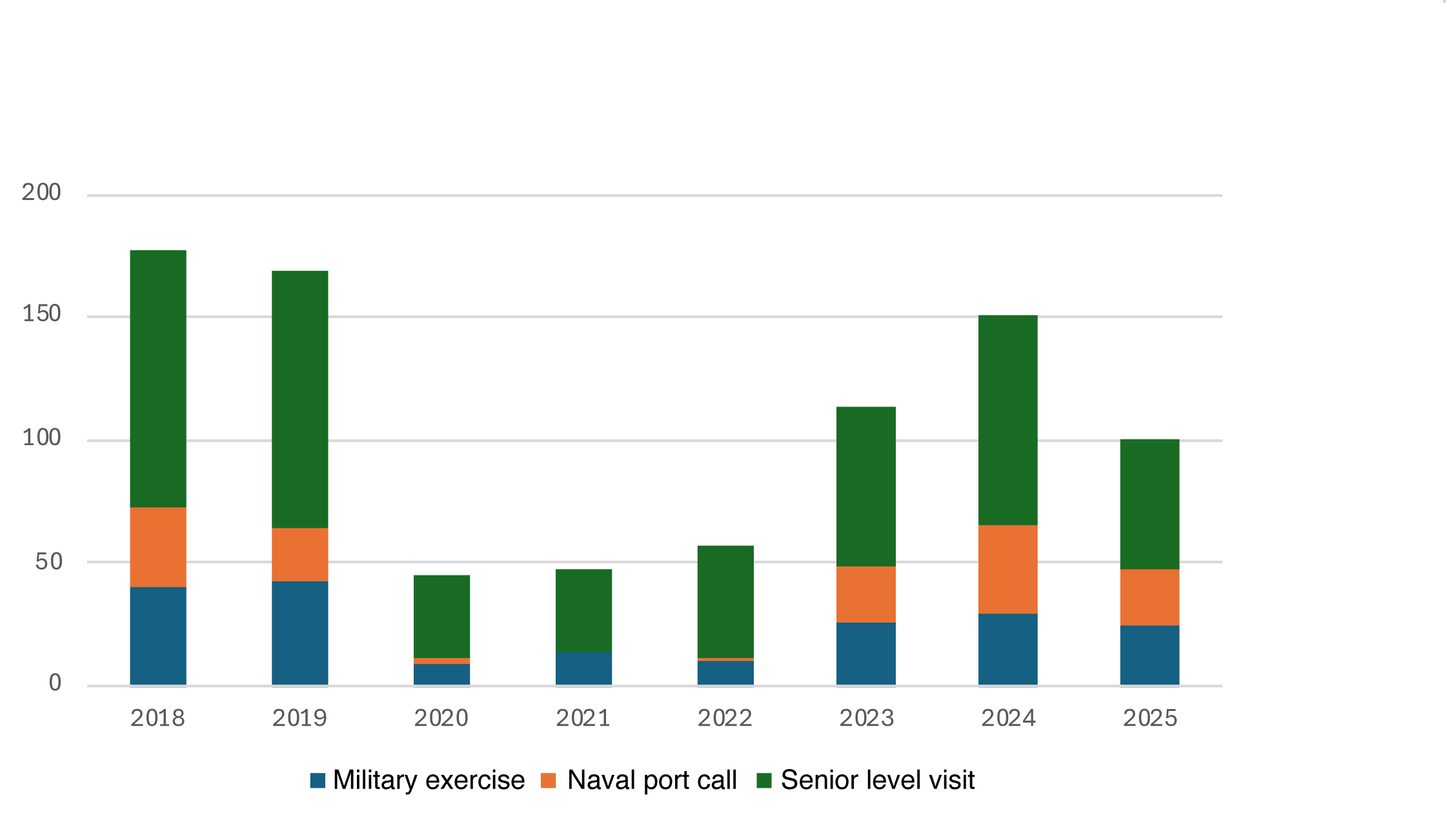
This article uses the NDU dataset to examine patterns in recent Chinese military diplomacy, documenting a rebound from historically low levels of activity during the COVID-19 pandemic to a post-COVID-19 peak in 2024.[4] Figure 1 shows the total number of PLA military diplomatic interactions from 2018 to 2025, revealing that all three categories of activity are still down somewhat from their pre-COVID-19 levels.[5]
Figure 1. Total PLA military diplomatic interactions, 2018–25
Source: “Chinese Military Diplomacy Database, version 6.0,” Center for the Study of Chinese Military Affairs, National Defense University, 7 May 2026.
One likely reason for decreased activity in 2025 is the impact of extensive anticorruption investigations and purges throughout the senior ranks of the PLA, including the purge of five of the six military members of the Central Military Commission (CMC).[6] The purges had little effect on PLA combined exercises with foreign militaries and overseas port calls, but they have significantly constrained engagements with foreign military leaders. The rest of this article digs deeper into specific types of PLA military diplomatic engagements.
Senior-Level Meetings
Most PLA military diplomatic engagements are senior-level meetings, which are usually carried out by the defense minister.[7] From 2018 to 2025, the defense minister carried out 68 percent of PLA senior-level meetings, about one-half of which were overseas. The CMC vice chairs play an important role in relations with China’s closest military partners such as Russia and Pakistan; they conducted 18 percent of PLA senior-level meetings. The chief of the CMC Joint Staff Department sometimes meets with foreign military counterparts who rank below the ministerial level. Meetings with these officers usually take place in China because they have other primary responsibilities and PLA regulations only permit one overseas trip per year for officers not in dedicated foreign affairs positions.[8] In the past, the deputy chief of the Joint Staff Department with the foreign affairs and intelligence portfolio regularly led meetings with foreign counterparts, but this role has shrunk significantly in recent years, likely because foreign militaries now designate more senior leaders to engage with the PLA and more senior PLA counterparts are required for protocol reasons. The head of the Ministry of National Defense (MND)/CMC Office for International Military Cooperation plays a central role in planning and supporting PLA military diplomacy but typically does not lead engagements with military counterparts.[9]
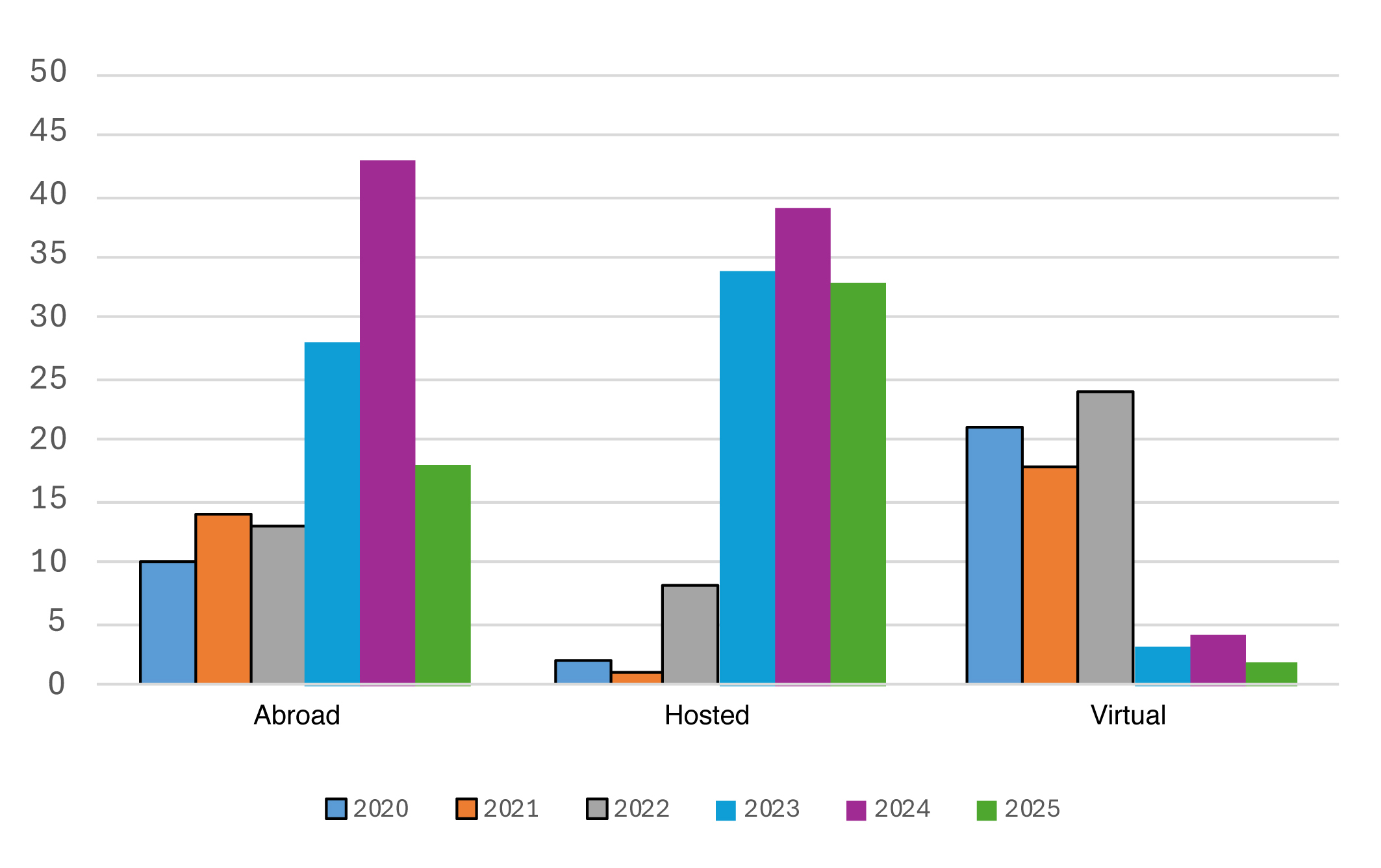
Figure 2 illustrates a breakout of PLA senior-level meetings from 2020 to 2025, showing the replacement of virtual meetings with physical meetings after the COVID-19 pandemic ended and a sharp decline in the number of overseas meetings in 2025.
Figure 2. Total number of senior-level meetings, 2020–25
Source: “Chinese Military Diplomacy Database, version 6.0,” Center for the Study of Chinese Military Affairs, National Defense University, 7 May 2026.
In 2025, China held bilateral meetings with a number of global and regional powers, often on the sidelines of multilateral meetings. Meetings with Russia included a bilateral meeting in June between Chinese Defense Minister Admiral Dong Jun and Russian Defense Minister Andrey Belousov at the Shanghai Cooperation Organization (SCO) Defense Ministers’ Meeting and a November 2025 visit to Moscow by CMC Vice Chair General Zhang Youxia. Admiral Dong conducted a secure video call with U.S. Secretary of Defense Pete Hegseth in September and followed up with an in-person bilateral discussion at the Association of Southeast Asian Nations (ASEAN) Defense Ministers’ Meeting Plus (ADMM-Plus) meeting in Kuala Lumpur, Malaysia, in October. Admiral Dong conducted 80 percent of the PLA’s senior meetings in 2025, including a May speech at the Sixth United Nations Peacekeeping Ministerial Meeting in Berlin and associated bilateral meetings with counterparts from France, Germany, Italy, and Nepal. Chief of the Joint Staff Department General Liu Zhenli met with four foreign military counterparts, including Admiral Tony Radakin, chief of the United Kingdom’s Defense Staff in April.[10]
MND spokesman Senior Colonel Zhang Xiaogang stated that China’s multilateral military diplomacy effectively “sends out the voice of the Chinese military” and builds consensus on the international stage.[11] Throughout 2025, the PLA participated in multiple high-level multilateral events, including attending the 12th ADMM-Plus and the 15th China-ASEAN Defense Ministers’ Informal Meeting in Malaysia in October and hosting the SCO Defense Ministers’ Meeting in June and both the 12th Beijing Xiangshan Forum and the China-Latin America High-Level Defense Forum in September. Admiral Dong represented China at all those multilateral meetings. In 2025 and 2026, PLA delegations to the International Institute of Strategic Studies (IISS) Shangri-La Dialogue in Singapore were led by military academics from National Defense University rather than the defense minister. The lower level and academic status of the PLA senior representative meant there were no high-level bilateral meetings between China and other countries at the dialogue, unlike the 2024 dialogue where Defense Minister Dong Jun conducted 10 bilateral meetings, including one with U.S. Secretary of Defense Lloyd J. Austin.[12] Admiral Dong’s absence from the 2025 dialogue may have reflected a desire to downplay the IISS meeting in favor of the PLA-hosted Xiangshan Forum or a reluctance to engage Secretary Hegseth at that moment.[13] Regardless, his absence contributed to the significant decline in PLA senior-level meetings overseas in 2025.
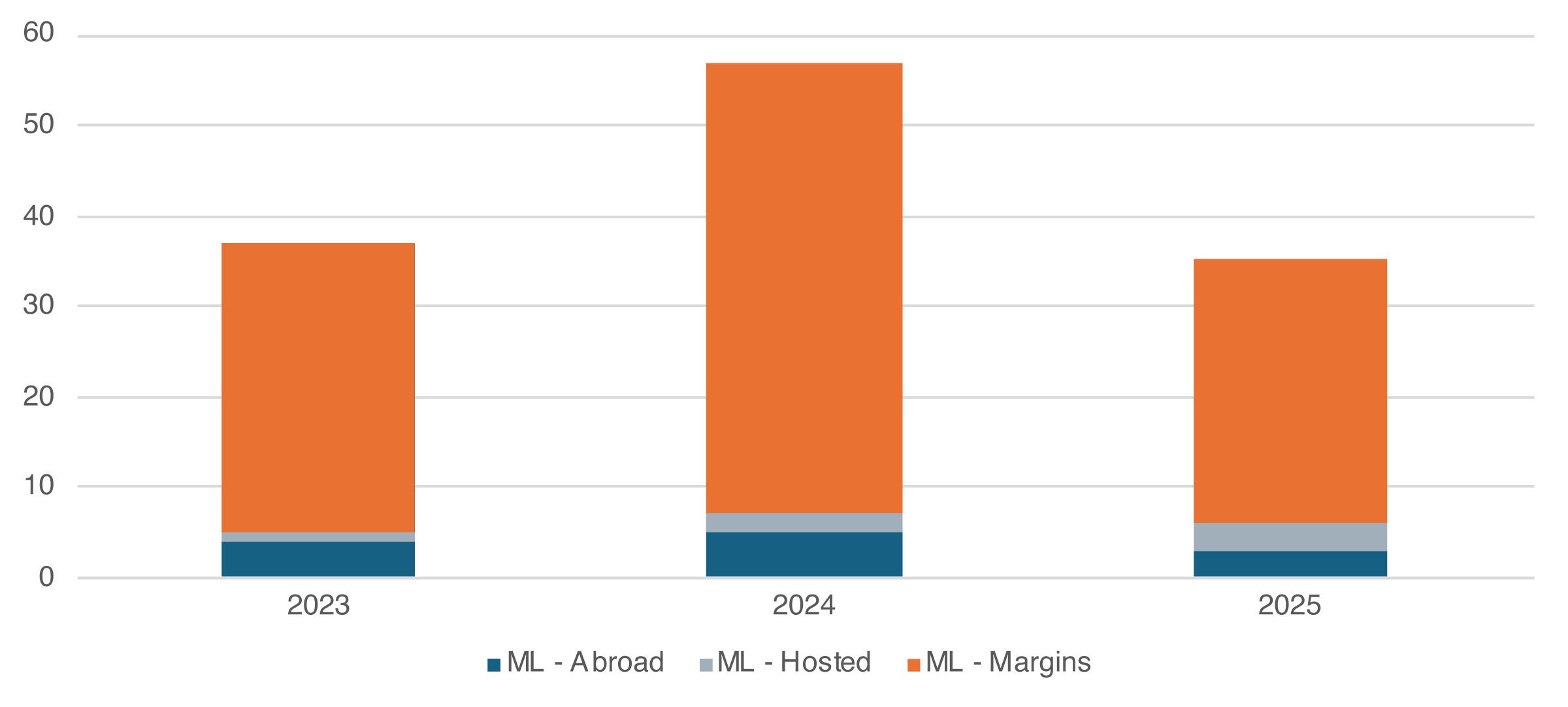
The PLA increasingly uses multilateral meetings as an opportunity to conduct bilateral meetings (figure 3). In 2023, there were a total of 32 bilateral meetings on the margins of multilateral meetings, with 15 conducted by Li Shangfu, the defense minister at the time, and the rest conducted by CMC Vice Chairs Zhang Youxia or He Weidong at the Xiangshan Forum in Beijing. In 2024, the number of meetings on the margins increased to 50, most of which were carried out at the Xiangshan Forum by defense minister Dong Jun, Zhang Youxia, He Weidong, and Wu Yanan, commander of the Southern Theater Command. The remaining meetings were carried out by Dong Jun at the April 2024 SCO meeting, the June 2024 Shangri-la Dialogue, and the November 2024 11th ADMM-Plus in Laos. In 2025, the number of meetings on the margins declined to 30, with only 13 meetings at the Xiangshan Forum or with countries attending the China-Latin America High-Level Defense Forum.
Figure 3. Multilateral meetings, 2023–25
Source: “Chinese Military Diplomacy Database, version 6.0,” Center for the Study of Chinese Military Affairs, National Defense University, 7 May 2026.
This decrease in the overall number of senior-level meetings and the number of meetings on the margins is likely connected to the investigation and subsequent purge of numerous PLA officials on corruption charges. Officers under investigation are typically not allowed to travel abroad or meet with foreign counterparts. The scale of the anticorruption campaign that began in 2023 and intensified in 2025 has shrunk the pool of senior officers available to engage with foreign counterparts. For example, the 2023 purges included the removal of two defense ministers (General Wei Fenghe and General Li Shangfu) who normally take the lead in the PLA’s military diplomacy. When General Li was removed from office in October 2023, CMC Vice Chairs Zhang Youxia and He Weidong took over his representational duties, holding 22 meetings with foreign counterparts during September–December 2023. Admiral Dong Jun was appointed defense minister in late December 2023 and then assumed responsibility for most senior-level meetings with foreign counterparts. However, Admiral Dong has a lower status within the PLA hierarchy than his predecessors since he is not a member of the Central Military Commission and has not been named as a state councilor, the customary rank given to previous defense ministers.[14]
Beginning in late 2017, CMC Vice Chair Zhang Youxia took the lead in managing China’s defense relationships with Russia and Pakistan, the PLA’s closest military partners. This included making 4 trips to Russia, 2 trips to Pakistan, and hosting 10 visits by senior Russian and Pakistani defense officials from 2018 to 2025. CMC Vice Chair He Weidong held 13 meetings with foreign counterparts in 2023 and 2024, including a meeting with the Cambodian defense minister at the Xiangshan Forum in October 2023 and two trips to Cambodia in October 2023 and March 2024 during the crucial period when China was finalizing an access agreement to Ream Naval Base.[15] These examples highlight the important role that CMC vice chairs play in military diplomacy.
In December 2024, CMC Vice Chair He Weidong traveled to Cuba for meetings, his last known engagement with foreign military counterparts. In March 2025, he disappeared from public view following the National People’s Congress meeting and was ultimately expelled from the CCP in October 2025. Fellow CMC Vice Chair Zhang Youxia was likely under investigation in 2025 and thus subject to constraints on overseas travel and interactions with foreign counterparts (Zhang held 18 senior-level meetings in 2023 and 9 in 2024 but only 1 in 2025).[16] This left Defense Minister Dong Jun as the only senior PLA officer with the necessary rank to interact with ministerial-level foreign counterparts and likely accounts for the significant decrease in senior-level meetings overseas and on the margins of multilateral events held in China.
Constraints on the availability of PLA senior leaders affected military diplomacy. Dong Jun was reported to be under investigation for corruption and did not meet with any foreign counterparts from January to March 2025.[17] He resumed official meetings in April 2025 but ultimately conducted only 43 senior-level meetings in 2025, down from 57 in 2024. In September 2025, the PLA hosted the Xiangshan Forum and the China-Latin America High-Level Defense Forum the next day. In 2024, four senior PLA officers (including CMC Vice Chairs Zhang Youxia and He Weidong) conducted 25 meetings on the margins of the Xiangshan Forum. In 2025, Dong Jun was the only PLA officer conducting such meetings and he was only able to meet with 13 counterparts. The one anomaly in this pattern is Zhang Youxia’s travel to Moscow in November 2025 for talks with Russian Defense Minister Andrey Belousov, his only meeting with a foreign counterpart in 2025.[18] Zhang was likely permitted to make the trip because sending a lower-level representative might have been perceived as a downgrade of the China-Russia military relationship and because Russia was highly unlikely to allow him to defect.
The removal of so many senior PLA officers (including chief of the Joint Staff Department Liu Zhenli, who was purged along with Zhang Youxia in January 2026) and the curtailment of activity by others who are under investigation will continue to affect the PLA’s ability to conduct senior-level meetings until they are replaced. Secretary of the CMC discipline inspection commission General Zhang Shengmin was appointed as CMC vice chair on 28 October 2025, but no replacements have been named for any of the other purged military members of the CMC. The purges explain the dramatic reduction in PLA senior-level meetings in 2025 and suggest that the volume will not return to normal until permanent replacements are named, probably no later than the 21st Party Congress in fall 2027.
One other innovation in PLA military diplomacy during 2025 deserves attention. China held its first ministerial level “2 + 2” meeting with Indonesia in April. Defense Minister Dong Jun and Foreign Minister Wang Yi met with their Indonesian counterparts, Defense Minister Sjafrie Sjamsoeddin and Foreign Minister Sugiono, in Beijing.[19] China’s adoption of the “2 + 2” mechanism, previously employed by the United States with its closest Asian allies as a symbol of the importance Washington places on the relationship, is notable. Indonesia is a prominent economic power within ASEAN and Southeast Asia as a whole and has taken a neutral stance on regional security issues like maritime territorial disputes in the South China Sea. Unlike the Philippines aligning with the United States due to concern over its island claims, Indonesia has styled itself as a nonclaimant state, which arguably gives China more diplomatic room to negotiate. The “2 + 2” mechanism highlights the priority Beijing places on relations with Jakarta, though Jakarta’s subsequent decision to sign a Major Defense Cooperation Partnership with the United States in April 2026 suggests that Indonesia continues to pursue a nonalignment policy.[20]
In March 2026, China held its first ministerial “3 + 3” meeting with Vietnam, which included China’s Minister of Public Security Wang Xiaohong and Vietnamese Minister of Public Security Luong Tam Quang in addition to the foreign and defense ministers. Chinese Foreign Minister Wang Yi stated that the strategic dialogue was intended to “safeguard political system security” and improve cooperation in both regional military security and various areas of law enforcement, including cybersecurity, telecommunications fraud, fugitive repatriation, and drug control.[21] This suggests a heightened desire from China to cooperate with Vietnam on regional issues, but also shows a willingness to work together on domestic law enforcement issues like transnational crime.[22] In April 2026, China held its first ministerial level “2 + 2” Strategic Dialogue with Cambodia, with Chinese Foreign Minister Wang Yi and Defense Minister Dong Jun visiting Phnom Penh for meetings with their Cambodian counterparts.[23]
Combined Exercises
Another major aspect of military diplomacy is PLA combined exercises with foreign militaries. MND Spokesman Zhang noted that the military exercises carried out in 2025 “enhanced our capabilities to jointly respond to security challenges,” with specific references to training done with Egypt, Malaysia, and Russia.[24] China held 25 exercises with foreign countries in 2025, down from 29 exercises in 2024 and about the same as the 24 exercises held in 2023. These totals are down significantly from the prepandemic period from 2015 to 2019, when the PLA averaged 43 combined exercises per year.
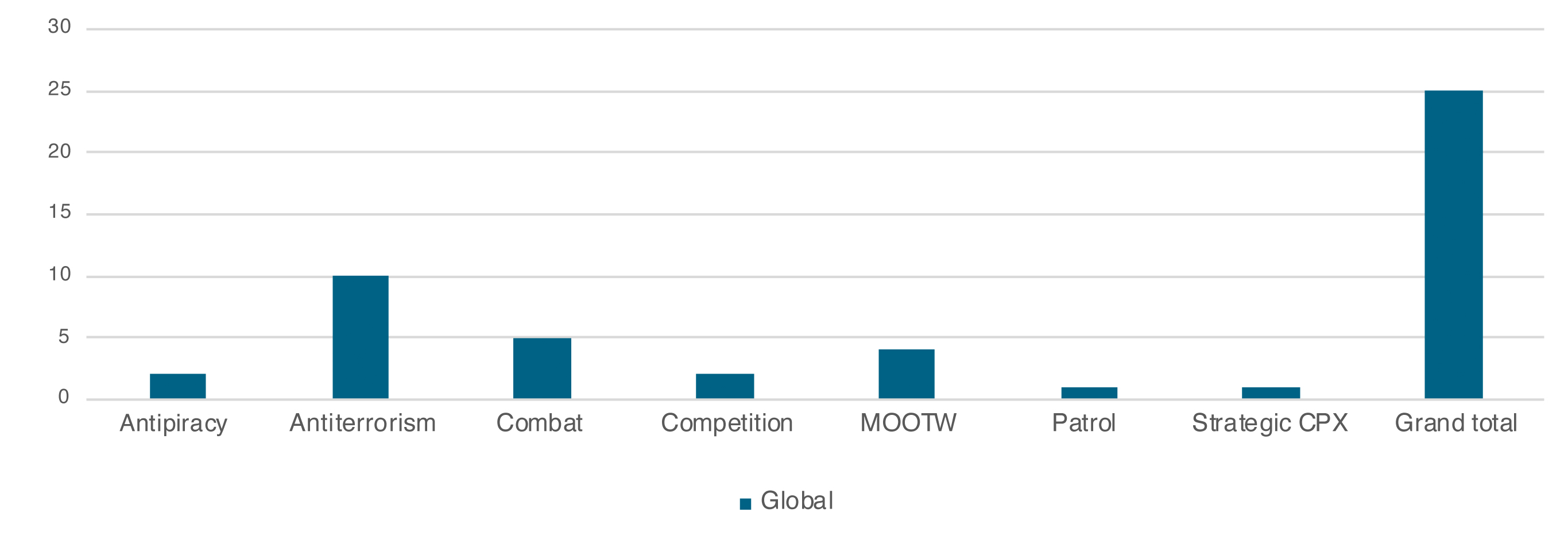
Figure 4 shows the breakout of 2025 exercises by type. The NDU database shows that 10 exercises focused on antiterrorism, along with four combat exercises and four exercises featuring military operations other than war. There were two antipiracy exercises and one strategic command post exercise (with Russia). The PLA also participated in two international military competitions, an April 2025 army skills competition in Pakistan and a sniper competition hosted by the People’s Armed Police in Urumqi, China, in July. Twelve of the 25 military exercises were held in the Indo-Pacific region, with 7 in the Middle East, 5 in Europe, and 1 in Africa. China held multiple exercises with Russia in 2025, including Exercise Joint Sea 2025 in August and Border Defense Cooperation 2025 in September. In December, China and Russia held their third joint antimissile exercise and their 10th joint strategic air patrol. In terms of services, the PLA Army held nine exercises in 2025, mostly with countries on China’s periphery, and the PLA Navy held eight exercises, including an out-of-area exercise with Saudi Arabia. The overall pattern of combined exercises in 2025 is similar to 2023 and 2024. One notable development is that a number of PLA combined exercises included uncrewed systems, providing the PLA an opportunity to demonstrate Chinese technology advances.
Figure 4. PLA international military exercises by function, 2025 (global)
Source: “Chinese Military Diplomacy Database, version 6.0,” Center for the Study of Chinese Military Affairs, National Defense University, 7 May 2026.
Port Calls
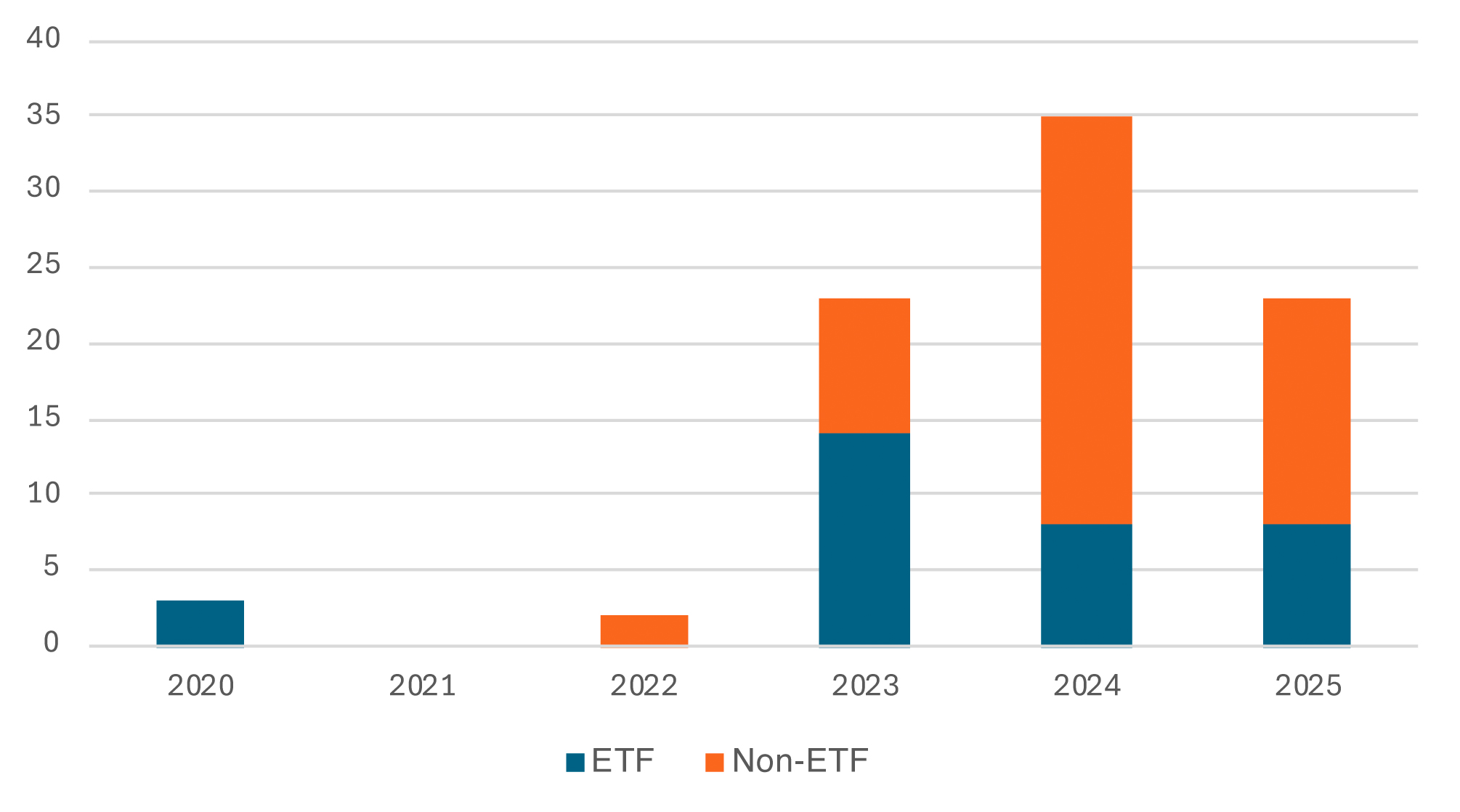
The PLA Navy (PLAN) regularly conducts overseas port calls as part of its military diplomacy. China’s overseas port calls dropped to zero in 2020 after the start of the COVID-19 pandemic but returned to prepandemic levels in 2023. Many port calls are conducted by the escort task forces (ETFs) that have conducted counterpiracy patrols in the Gulf of Aden since December 2008. These ships used to conduct regular replenishment port calls while on patrol but now receive support from the PLA Navy’s logistics support base in Djibouti. The ETF ships typically conduct between three and eight port calls on their way back to China, traveling as far afield as the Persian Gulf, Africa, and Europe.[25] Non-ETF ships also conduct overseas port calls as part of their deployments.
Figure 5 shows that the number of PLA Navy port calls grew significantly in 2024, only to decrease again in 2025. The 2024 surge was likely due to Mission Harmony 2024, a series of port calls made by the hospital ship Peace Ark, which visited 14 African countries. In 2025, the Peace Ark visited Singapore in early January before returning to China.
Figure 5. Total outbound port calls, 2020–25
Source: “Chinese Military Diplomacy Database, version 6.0,” Center for the Study of Chinese Military Affairs, National Defense University, 7 May 2026.
A new hospital ship, Silk Road Ark, carried out Mission Harmony 2025 starting in September, but had only visited six countries by the end of the calendar year.[26] Mission Harmony 2025 began with visits to island nations in the South Pacific, including Nauru, Fiji, and Tonga. The Silk Road Ark then traveled to the Western Hemisphere to visit Nicaragua, Barbados, and Jamaica. In January 2026, Silk Road Ark visited Brazil and conducted a maritime medical rescue drill with vessels from the Brazilian Navy and made a four-day technical stop in Uruguay.[27] In early March 2026, Silk Road Ark visited Chile for a weeklong visit, but the Chilean government did not allow PLA doctors to treat patients.[28]
The number of port calls performed by other PLAN ships also decreased slightly, from 21 in 2024 to 15 in 2025. The difference can mainly be attributed to the deployment of multiple training ships in 2024, such as the Qi Jiguang, Po Lang, and Zheng He, as well as a handful of other naval task forces. With regard to the counterpiracy escort task forces, the 45th and 46th ETFs made only four port calls in 2024. In 2025, the 47th and 48th ETFs made 11 port calls, which represents a shift back toward the historical pattern. In late 2025, the PLAN’s 989 Task Group, comprised of the amphibious transport dock Changbai Shan and the Zheng He and Xiangqianjin-1 training ships, conducted three port calls total while on a training mission. Earlier in the year, the Changbai Shan transport dock also carried out a single port call in Brunei.
Conclusion
During the past three years, China’s military diplomacy has rebounded since the COVID-19 pandemic but has not yet returned to prepandemic levels. While there was a substantial increase in activity during 2024, overall military diplomacy in 2025 was closer to 2023 levels. The number of combined military exercises was down slightly from 30 in 2024 to 25 in 2025, with the PLA generally prioritizing exercises with close partners such as Russia and Pakistan. The army and the navy conducted the most combined exercises, but the number of army exercises declined in 2023–25 while naval combined exercises stayed constant. The number of overseas port calls declined more significantly from 35 in 2024 to 22 in 2025, but the change was largely due to scheduling factors such as the timing of hospital ship missions and fewer training ship patrols.
The most noticeable change came in a significant reduction in the number of senior-
level visits from 86 in 2024 to only 53 in 2025. This included a drop in PLA senior leader travel abroad from 43 overseas visits in 2024 to only 18 in 2025 and a reduction in the number of bilateral meetings on the sidelines of multilateral events in China and overseas. This decline is almost certainly due to the cumulative impact of PLA purges and the investigations, which curtailed the ability of senior PLA officials to travel and meet with foreign counterparts, leaving Defense Minister Dong Jun as the sole PLA officer available to meet with ministerial-level foreign counterparts. The PLA prioritized meetings with Russia, Pakistan, Vietnam, the United States, and Cambodia where it was negotiating access to the port in Ream. The high number of senior PLA officers currently under investigation will continue to hinder the PLA’s capability to conduct senior-level meetings until permanent replacements are named.
Endnotes